Add Your Heading Text Here
The Ocean’s Challenge
The ocean is vast, beautiful, and unforgiving. In the world of maritime search and rescue (SAR), those three qualities can mean the difference between life and death. Each year, thousands of people—fishermen, sailors, migrants, offshore workers—find themselves in distress at sea. They may be caught in sudden storms, stranded after a vessel breakdown, or lost after falling overboard. In these moments, time is not just money—it is survival.
For decades, maritime SAR has relied on a combination of human vigilance, radar sweeps, patrol ships, and manned aircraft. These tools have saved countless lives, but they come with limitations. Manned aircraft have finite endurance and high operational costs. Ships can take hours, sometimes days, to reach an incident location.
Radar can miss small or partially submerged objects, especially in rough seas. When the search area stretches over hundreds of nautical miles, these challenges compound.
The stakes are even higher in the modern era. Shipping lanes are busier than ever. Climate change is altering weather patterns, making storms less predictable. Migrant crossings in fragile vessels have surged in multiple regions, from the Mediterranean to the Pacific. And offshore industries—oil, gas, wind energy—place more workers in remote maritime environments. In each of these scenarios, the clock starts ticking the moment distress is signaled.
This is where unmanned aerial systems (UAS) are changing the game. Instead of sending a manned aircraft into potentially hazardous conditions, a UAS can launch directly from a patrol vessel, operate for over 24 hours without refueling, and scan vast areas with high-resolution sensors. Equipped with both day and night vision, radar, and AI-assisted detection algorithms, these systems can spot life rafts, debris, or even a single person in the water.
Among the leaders in this transformation is the Orbiter UAS family, developed by Israel’s Aeronautics Group. The latest in the line, the Orbiter 4, represents a significant leap in capability for maritime missions. Designed for both military and civilian applications, it bridges the gap between small tactical drones and large strategic UAVs—offering long endurance, multiple payload options, and the flexibility to operate from small platforms.
But the real value of the Orbiter in SAR missions goes beyond its technical specs. It’s about enabling faster decision-making. In SAR, every minute saved in locating a target is a minute gained for rescue crews to act. A UAS like the Orbiter can maintain a constant aerial watch, transmit live video feeds to command centers, and coordinate directly with rescue boats—all without risking a single pilot.
This introduction to the challenges of maritime SAR and the promise of UAS sets the stage for our deeper dive into how the Orbiter is deployed, how it compares to other systems, and what the future holds for unmanned rescue operations. In the next section, we’ll examine why SAR at sea is uniquely difficult—and how technology is beginning to close the gap between distress call and rescue.
The Problem – Why SAR at Sea Is So Difficult
Maritime search and rescue missions operate in one of the most complex and unpredictable environments on Earth. Unlike land-based rescue, where geography is fixed and landmarks can be used for orientation, the ocean is a shifting, boundless landscape. Every factor—weather, lighting, sea conditions, even the movement of the target—can change rapidly and without warning. These challenges make SAR at sea uniquely demanding for crews, equipment, and decision-makers.
1. Harsh Weather and Poor Visibility
The sea can turn hostile in minutes. A calm morning can give way to gale-force winds, heavy rain, and waves that tower over a ship’s deck. In such conditions, visibility drops sharply, making it nearly impossible to spot small objects or people in the water. Night operations add another layer of difficulty. Traditional searchlights or flares have limited reach, and even advanced radar can struggle to distinguish between wave crests and potential targets in heavy seas.
2. Vast Search Areas
SAR teams often work with only an approximate last known location. If a distress call comes from a vessel in trouble, wind, waves, and currents can carry survivors miles away from that point in a matter of hours. This means that the “search box” can expand to hundreds or even thousands of square kilometers. Manned aircraft can cover these distances quickly but are constrained by fuel limits, crew endurance, and high operational costs. Ships, though capable of operating for days, move much more slowly and may arrive too late.
3. Limited Response Time
In cold water, survival time can be brutally short. A person in 10°C (50°F) water may lose consciousness in under an hour. Even in warmer waters, dehydration, hypothermia, or injuries can severely reduce survival chances. The pressure on SAR crews is immense: every minute counts, and every delay can mean the difference between rescue and recovery.
4. Resource Constraints
Many SAR operations rely on a small number of patrol vessels and aircraft to cover vast maritime zones. These resources are often shared with other duties such as border security, anti-smuggling patrols, or fisheries monitoring. Deploying a helicopter or long-range patrol aircraft for every incident is simply not feasible—especially when false alarms or ambiguous sightings occur.
5. Detection Challenges
Spotting a person in the water from the air is far harder than it sounds. Human eyes can miss even large objects when scanning at speed, especially against the constantly moving backdrop of the ocean. Optical illusions caused by waves, glare, and shadow can make small life rafts or debris invisible until it’s too late. Radar can help, but small objects with low radar cross-sections—like a person in a lifejacket—are notoriously difficult to detect.
6. Coordination and Communication
SAR operations often involve multiple agencies—naval forces, coast guards, civilian rescue services, and sometimes international partners. Coordinating their efforts over long distances, in poor weather, and across different communication systems adds yet another layer of complexity. Information gaps, outdated positional data, or miscommunication can all slow down the rescue effort.
These combined factors explain why maritime SAR has historically been labor-intensive, costly, and prone to gaps in coverage. They also highlight the need for tools that can overcome these barriers: systems that can stay in the air for extended periods, cover huge distances, operate in poor visibility, and provide reliable real-time data to rescue teams.
This is where the Orbiter 4 UAS enters the picture—not as a replacement for human crews, but as a force multiplier that extends their reach and sharpens their effectiveness. In the next section, we’ll take a closer look at the technology behind the Orbiter 4 and why it’s particularly suited to the unforgiving environment of maritime SAR.
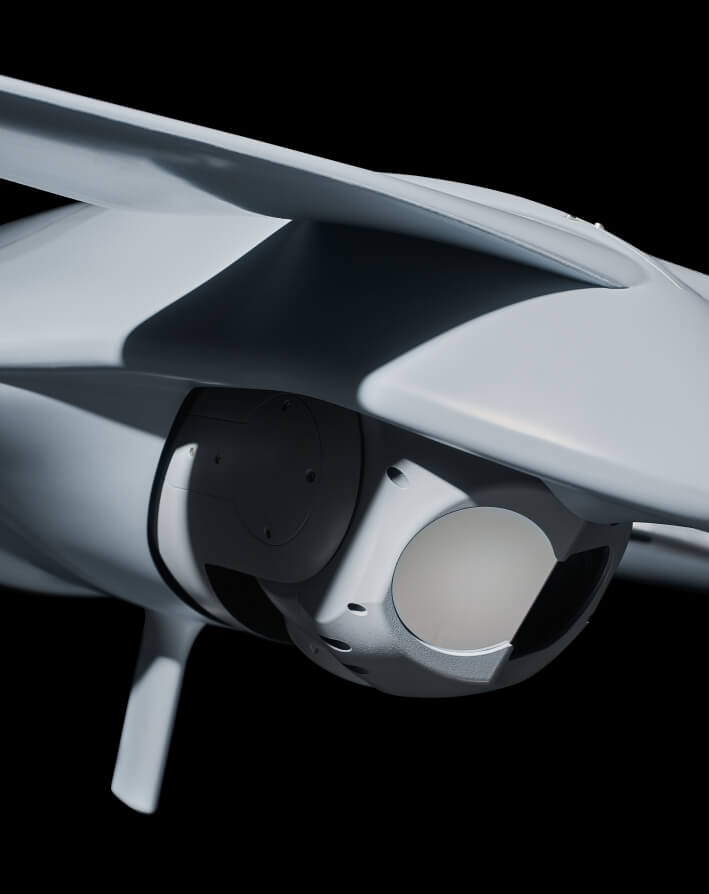
The Solution – Orbiter 4 UAS
When Aeronautics Group designed the Orbiter 4, they weren’t just building another tactical drone—they were engineering a platform capable of operating where human endurance and traditional aviation often fail: the open sea. This small tactical unmanned aerial system (STUAS) blends endurance, adaptability, and sensor integration to give maritime search and rescue (SAR) teams a new kind of aerial partner.
Compact but Capable
The Orbiter 4’s design philosophy centers on delivering strategic-level capabilities in a platform small enough to operate from confined spaces. Unlike large UAVs that require runways or complex launch infrastructure, the Orbiter 4 uses a compact catapult launch and net recovery system. This allows it to be deployed from patrol vessels, offshore platforms, or even remote coastlines without the need for a landing strip. The entire system can be transported and assembled by a crew of just three people.
Endurance That Changes the Game
One of the most pressing challenges in SAR is time. With a flight endurance of over 24 hours, the Orbiter 4 can stay on station long after helicopters and most manned aircraft have returned to base. This extended loiter time means continuous monitoring of a search area, reducing the risk of losing contact with a target due to crew rotations or fuel limitations.
Multi-Sensor Payload Flexibility
A hallmark of the Orbiter 4 is its ability to carry two payloads simultaneously—a rare feature in this class of UAV. For maritime SAR, the most common configuration combines:
EO/IR (Electro-Optical/Infrared) sensors for high-resolution day and night imaging.
Maritime Patrol Radar (MPR) for detecting small vessels, life rafts, or debris even in poor visibility.
The ability to use both sensors at the same time allows operators to locate, track, and identify targets without switching aircraft or losing valuable search time.
GPS-Denied Navigation
In certain maritime environments—whether due to jamming, interference, or natural signal degradation—GPS can’t be relied upon. The Orbiter 4 is equipped with navigation systems that function independently of GPS, ensuring it can maintain mission accuracy even in contested or degraded environments.
Data in Real Time
The system streams live, high-definition imagery and radar data back to command centers, enabling SAR coordinators to make informed decisions without delay. This real-time situational awareness can be the deciding factor in whether a rescue team intercepts survivors before conditions worsen.
Ruggedized for Maritime Operations
Saltwater, wind, and the constant motion of a ship deck present unique challenges for any aircraft. The Orbiter 4 is designed with corrosion-resistant materials and a structure that can withstand high sea states during launch and recovery. Its autonomous takeoff and landing routines minimize the risk of damage, even when operating from a pitching deck.
Small Crew, Big Reach
With its minimal crew requirement, low maintenance footprint, and ease of transport, the Orbiter 4 offers SAR agencies a cost-effective way to extend their surveillance coverage without dramatically expanding their fleet of manned aircraft or vessels.
In many ways, the Orbiter 4 is more than a tool—it’s a force multiplier. By pairing human expertise with an unmanned system that never tires, SAR teams can keep a constant eye on vast and challenging search areas. In the next section, we’ll explore how this capability translates into real-world maritime operations, from integration on naval vessels to successful deployment in high-stakes rescue missions.
Deployment in Real Maritime Operations
The true measure of any search and rescue technology lies not in its technical specifications, but in its performance under real-world conditions. The Orbiter 4 UAS was designed from the outset to fit seamlessly into maritime operations—whether aboard a military patrol vessel, a coast guard cutter, or a civilian rescue ship. Its adaptability and reliability in operational environments have made it a valuable asset in missions where speed, precision, and endurance can mean the difference between life and death.
Integration on Naval and SAR Vessels
One of the Orbiter 4’s greatest strengths is its ability to operate from ships of varying sizes without the need for a runway. The catapult launch system and net recovery setup can be installed on the deck of a vessel with minimal modifications. This means that small patrol boats, medium-sized cutters, or larger frigates can all act as launch platforms.
Once airborne, the Orbiter 4 can be controlled directly from the ship or remotely from a coastal command center, depending on the mission requirements. Its 150 km operational range ensures that a single vessel can monitor a vast search area without physically entering every sector.
Small Crew, High Efficiency
Operating a manned maritime patrol aircraft typically requires multiple pilots, crew members, and ground support staff. The Orbiter 4, by contrast, can be launched, operated, and recovered by just three trained personnel. This smaller footprint allows SAR agencies to deploy multiple units across their area of responsibility without overstretching manpower.
Adaptation to Harsh Sea Conditions
Launching and recovering aircraft at sea is inherently risky, particularly in high sea states. The Orbiter 4’s autonomous takeoff and recovery procedures significantly reduce the margin for error. The system’s ruggedized airframe and corrosion-resistant materials allow it to withstand the salt spray, strong winds, and temperature extremes that are routine in maritime operations.
In operational trials, the Orbiter 4 has successfully launched and landed in conditions where many smaller UAVs would have been grounded, ensuring that SAR coverage is maintained even in challenging weather.
Operational Scenarios
In a typical SAR deployment, the Orbiter 4 may be launched from a patrol vessel after receiving a distress signal. Its EO/IR sensors can begin scanning the suspected area immediately, while the onboard maritime radar works to detect anomalies on the water surface—anything from a drifting life raft to debris from a capsized vessel.
Once a target is identified, live video and positional data are transmitted to the SAR command center and nearby rescue boats. This real-time feed enables precise vectoring of rescue assets, cutting down response time and maximizing the chances of a successful recovery.
Case Example: Long-Endurance Surveillance
During a simulated SAR exercise in the Mediterranean, the Orbiter 4 maintained a continuous search pattern over a 100-square-nautical-mile area for more than 20 hours. This allowed SAR coordinators to track drifting objects over long periods—something that would have required multiple aircraft rotations under traditional methods. The exercise demonstrated how a single Orbiter 4 could effectively replace several short-range sorties, freeing manned aircraft for tasks where their speed and onboard medical facilities are essential.
Interoperability and Data Sharing
Modern SAR missions often involve multiple stakeholders, including coast guards, navies, NGOs, and even commercial shipping companies. The Orbiter 4’s secure data transmission protocols allow imagery and sensor data to be shared across different agencies in real time. This not only improves coordination but also prevents duplication of effort, ensuring that resources are focused where they are most needed.
With its adaptability, small crew requirement, and resilience in tough conditions, the Orbiter 4 has proven it can integrate smoothly into maritime SAR operations—whether in exercises or real emergencies.
In the next section, we’ll shift focus to the human impact of this technology—how Orbiter 4’s capabilities directly translate into more lives saved and faster rescues at sea.
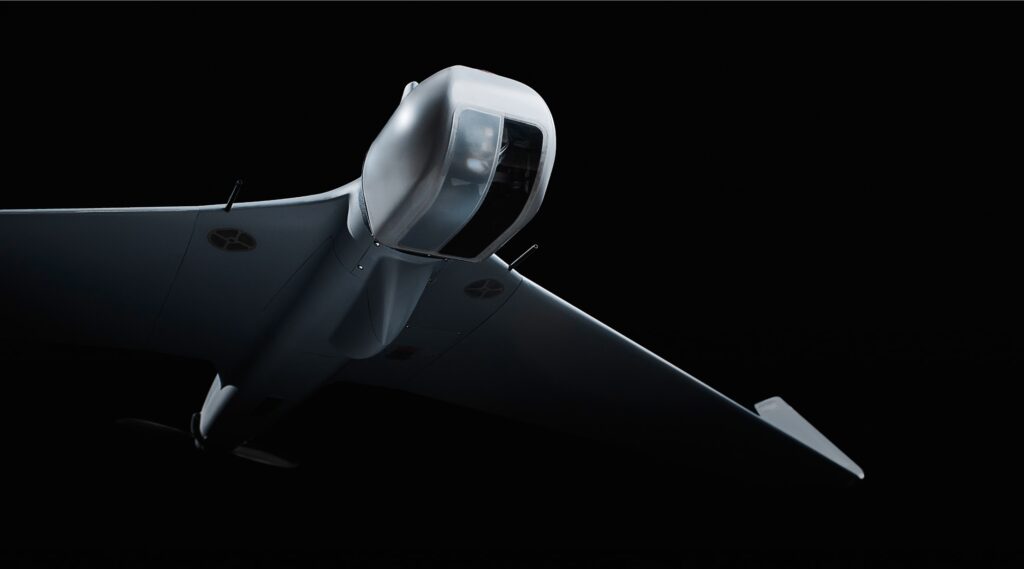
Impact – From Technology to Lives Saved
Technology in search and rescue is only as valuable as the lives it helps preserve. For the Orbiter 4 UAS, the real achievement lies not in its specifications but in how those capabilities shorten the gap between distress and rescue. In maritime SAR, that gap can be deadly. Reducing it—even by minutes—can turn a tragedy into a survival story.
Faster Target Detection
In conventional SAR missions, identifying the location of survivors can take hours. Helicopters are fast but can only remain on station for a limited time, while ships may take hours to arrive. The Orbiter 4’s endurance of more than 24 hours means it can be launched immediately upon receiving a distress alert and remain airborne long enough to methodically search large areas.
In practice, this means that while manned aircraft handle initial rapid-response sweeps, the Orbiter 4 can continue the search long after they must return to refuel, ensuring there is never a gap in aerial coverage.
Improved Night and All-Weather Capability
Survivors are often lost not because they are far away, but because they are invisible. Darkness, heavy rain, fog, or glare off the waves can hide even brightly colored life rafts. The Orbiter 4’s dual EO/IR payload allows it to detect heat signatures from people or engines, even when visual contact is impossible.
This capability is particularly crucial at night, when rescue assets would otherwise have to rely solely on radar or flares—both of which have significant limitations in rough seas.
Maintaining Continuous Tracking
In rough waters, survivors can drift miles from their last known position in a short time. Traditional SAR sometimes suffers from the “lost contact” problem—finding survivors once, then losing them before rescue assets arrive. The Orbiter 4 addresses this by maintaining a persistent watch, updating their position in real time so rescue boats can navigate directly to them without repeated search cycles.
Reducing Risk to Rescuers
Sending helicopters into extreme weather or over long distances is dangerous and costly. By assigning the Orbiter 4 to initial search sweeps or extended surveillance, SAR teams can minimize the time manned aircraft and ships spend in hazardous zones. This preserves human safety while still ensuring eyes remain on the search area.
Case Study: Migrant Boat Interception
In a recent Mediterranean SAR operation involving multiple agencies, an Orbiter 4 launched from a naval vessel detected a small, overloaded migrant boat drifting 90 km offshore. Using infrared imaging, it identified the vessel at night despite heavy cloud cover. Rescue ships were vectored to the location and arrived within three hours—saving more than 40 people from an increasingly unstable craft. Without the Orbiter’s early detection, it’s likely the vessel would have been spotted much later, with far more dangerous consequences.
Psychological Effect on Survivors
In maritime survival situations, hope is as vital as warmth or food. When the Orbiter 4 locates survivors and circles overhead, rescue crews can communicate via radio or visual signals, reassuring them that help is on the way. This can prevent panic, conserve energy, and improve survival chances until physical rescue is possible.
In short, the Orbiter 4 transforms SAR from a race against time into a coordinated, sustained effort with vastly improved odds of success. It does not replace human skill or bravery—but it gives rescuers more time, better intelligence, and a safer way to bring people home alive.
In the next section, we’ll look at how the Orbiter 4 compares to other maritime UAS platforms, highlighting what sets it apart and where it fits in the broader SAR toolkit.
Comparison with Similar Systems
The Orbiter 4 is not the only unmanned aerial system designed for maritime surveillance and search and rescue (SAR). Over the past decade, a number of UAS platforms—both tactical and strategic—have entered service with navies, coast guards, and civilian agencies. To understand where the Orbiter 4 fits, it’s worth examining how it stacks up against some of its closest competitors.
1. Elbit Systems Hermes 900 Maritime Patrol
The Hermes 900 is a medium-altitude, long-endurance (MALE) UAV used by several countries for maritime missions. With an endurance of over 30 hours and a much larger payload capacity than the Orbiter 4, it can carry sophisticated radar, SIGINT packages, and multiple EO/IR turrets simultaneously.
Strengths:
Longest endurance in its class
Heavy payload capacity
Proven track record in disaster relief and SAR (e.g., floods in Brazil, maritime migrant rescues)
Limitations compared to Orbiter 4:
Requires a runway for launch and recovery
Larger operational footprint and crew requirement
Less suitable for rapid deployment from small vessels
Verdict: Ideal for large-scale maritime patrols from land bases, but less agile than the Orbiter 4 in shipborne operations.
2. Boeing Insitu ScanEagle
The ScanEagle is another well-known small tactical UAS used in maritime operations. With an endurance of 12–20 hours, it offers good persistence and can be launched from ships via a catapult and recovered using a skyhook system.
Strengths:
Shipborne capability similar to Orbiter 4
Lower logistical requirements than larger UAVs
Proven operational history in various navies
Limitations compared to Orbiter 4:
Lower endurance (max ~20 hours)
Typically limited to a single payload at a time
Less advanced GPS-denied navigation capabilities
Verdict: A reliable option for smaller patrol areas, but Orbiter 4 offers longer persistence and multi-sensor flexibility.
3. Schiebel Camcopter S-100
The Camcopter S-100 is a rotary-wing UAS with vertical takeoff and landing (VTOL) capability, giving it the advantage of operating from extremely confined spaces.
Strengths:
VTOL means no launch/recovery gear needed
Excellent for hovering and close observation
Widely used for shipborne SAR and surveillance
Limitations compared to Orbiter 4:
Lower endurance (~6 hours)
Smaller operational range
Higher maintenance requirements for maritime deployments
Verdict: Excellent for short-duration close-in inspections, but not designed for persistent wide-area search like the Orbiter 4.
4. Unique Selling Points of the Orbiter 4
When compared to these systems, the Orbiter 4’s defining advantages are:
True shipborne capability without the complexity of large UAVs or the limited range of VTOL systems
Extended endurance (>24 hours) comparable to much larger platforms
Dual-payload capacity, allowing simultaneous EO/IR and maritime radar use
GPS-denied navigation resilience for contested or degraded environments
Small crew and minimal logistics, enabling rapid deployment on a wide variety of vessels
In summary, the Orbiter 4 occupies a sweet spot between small tactical UAVs and larger MALE drones—offering endurance and sensor versatility close to the latter, but with the mobility and low footprint of the former. This balance makes it especially attractive for maritime SAR, where flexibility and persistence are often more valuable than sheer payload capacity.

Future Outlook – Beyond Orbiter 4
The Orbiter 4 has already redefined what a small tactical unmanned aerial system can achieve in maritime search and rescue (SAR). But technology never stands still, and the next decade promises even greater leaps in capability—advances that could further shrink the time between a distress call and a successful rescue.
Orbiter 5 – The Next Generation
Aeronautics Group has already unveiled the Orbiter 5, a larger and more capable successor to the Orbiter 4. Designed to push the boundaries of tactical UAS performance, the Orbiter 5 offers:
Endurance exceeding 25 hours
Payload capacity of over 25 kg—enough to carry multiple advanced sensors, communications relays, or even specialized rescue equipment
Enhanced AI-powered onboard processing for object detection and tracking without constant human input
Improved all-weather resilience, expanding operational windows in rough seas and heavy storms
For SAR missions, these upgrades mean the ability to monitor even larger search areas, detect smaller or more subtle targets, and coordinate multiple rescue assets autonomously.
AI and Autonomous Decision-Making
The future of maritime SAR will likely be shaped by machine learning algorithms capable of detecting patterns in real time. Instead of human operators scanning hours of video footage, AI systems could instantly flag heat signatures, unusual movement patterns, or radar anomalies for closer inspection.
In a real-world scenario, this could mean identifying a drifting life raft among thousands of radar contacts within seconds—something that currently takes human crews far longer.
Satellite-UAS Integration
Next-generation SAR systems are expected to integrate satellite communications directly into UAS platforms. This would remove the range limitations of current line-of-sight control, allowing drones like the Orbiter series to operate thousands of kilometers from their launch point while still streaming live data. Such capability would be transformative for open-ocean rescues, where incidents occur far from any coast.
Multi-Drone Coordination
Swarm technology is another frontier. Multiple UAVs could work in coordinated grids, each assigned a section of the search area, sharing data in real time. This would allow SAR agencies to search enormous areas simultaneously without requiring dozens of manned assets.
Hybrid Air-Sea Rescue Assets
Future UAVs may not only detect survivors but also deliver life-saving equipment—such as inflatable rafts, thermal blankets, or emergency beacons—directly to those in distress before rescue boats arrive. With the increased payload capacity of the Orbiter 5 and beyond, this is no longer a distant concept but an achievable goal.
Environmental and Humanitarian Impact
As maritime UAS technology evolves, it could have a profound humanitarian impact. Faster rescues mean fewer fatalities among migrants, fishermen, and offshore workers. Better detection and coverage could also aid in environmental disaster response—spotting oil spills early, tracking drifting containers, or monitoring illegal fishing activities that threaten marine ecosystems.
In short, the Orbiter 4 represents a major step forward, but it may only be the beginning. With AI, satellite integration, and multi-drone operations on the horizon, the maritime SAR missions of the 2030s could be faster, safer, and more effective than anything possible today.
Conclusion – Innovation as a Lifeline
In maritime search and rescue, the difference between life and death is often measured in minutes. The ocean’s vastness, its unpredictability, and its ability to conceal danger make SAR one of the most challenging operations in the world. The arrival of platforms like the Orbiter 4 UAS has not just improved these missions—it has fundamentally changed what is possible.
Where traditional SAR relied heavily on manned aircraft, patrol ships, and a race against fuel and fatigue, the Orbiter 4 brings persistent aerial coverage. Its ability to operate for over 24 hours, carry multiple high-performance sensors, and launch from almost any vessel has made it a force multiplier for SAR agencies. By maintaining eyes on the search area long after manned assets have departed, it ensures that no target drifts unnoticed, no signal goes uninvestigated, and no survivor is left waiting in uncertainty.
But beyond endurance and sensor technology, the Orbiter 4’s greatest contribution is speed to actionable information. Live, high-definition video streams and radar data enable command centers to make real-time decisions, vector rescue boats directly to survivors, and adapt quickly to shifting conditions. This efficiency not only increases the chances of a successful rescue—it also reduces risks to rescuers themselves.
The human impact of this technology is undeniable. Migrants adrift on an overcrowded boat, a fisherman swept overboard in a storm, or a crew trapped on a damaged vessel far offshore—all stand a better chance of survival when a UAS like the Orbiter 4 is in the sky above them. And the psychological comfort survivors feel when they see an unmanned aircraft overhead—knowing they have been found—cannot be measured in numbers alone.
Looking ahead, the trajectory of unmanned maritime SAR technology points toward even greater autonomy, endurance, and integration. The next generation, led by platforms like the Orbiter 5, promises larger payloads, AI-enhanced detection, satellite-linked global reach, and the ability to coordinate swarms of drones across massive search areas. In this future, human rescuers will be supported by fleets of tireless robotic partners, working in perfect synchronization to save lives.
In the end, maritime SAR is not just about ships, helicopters, or drones—it is about hope. The hope that when disaster strikes far from shore, someone is looking, someone is coming, and the technology is in place to bridge the gap between peril and safety. The Orbiter 4 embodies that hope, proving that in the most unforgiving environment on Earth, innovation can be a lifeline.